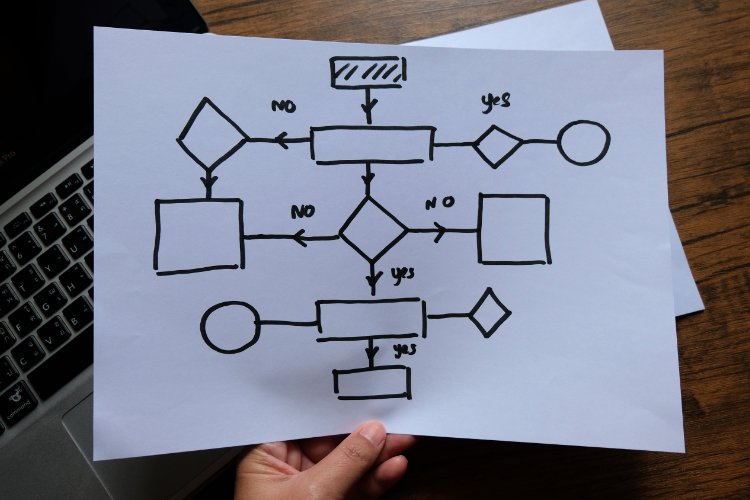
When people talk about website design, they often mean the visible parts: color palettes, fonts, layouts, and grids. Those elements matter, but they are only the surface. Real website design is a system of decisions, tradeoffs, and long-term considerations that shape how people trust and engage with a business over time.
For business owners, non-technical decision-makers, and marketing managers, this distinction matters. A website is one part of a broader sales and communication system, and like any system that supports decision-making, it must be designed with intention.
The Questions Come First
At its core, website design answers a series of questions:
-
Who is this site for?
-
What decisions are visitors trying to make?
-
What expectations do they bring with them?
-
What level of familiarity or novelty feels credible in this industry?
Visual choices (color, typography, spacing) come after these questions are answered.
A healthcare website, for example, carries very different expectations than a creative studio or cultural brand. Visitors arrive with unconscious assumptions shaped by industry norms. In some spaces, deviation from those norms signals innovation; in others, it introduces doubt.
Good website design respects those expectations when needed, and challenges them only when there is a clear purpose.
Familiarity Is Often Strategy
There is a reason many successful websites look “simple.”
Early versions of Google were famously minimal, and even today the experience remains highly restrained:google.com
The restraint was a strategic decision. The interface reduced friction, supported fast decision-making, and reinforced trust by letting the design disappear behind the task.
Another strong example is the UK government’s digital service: GOV.UK: www.gov.uk
It is intentionally plain, highly structured, and accessibility-first, and its goal is clarity. In environments where people are trying to understand policies, make decisions, or complete important tasks, familiarity and predictability are features in their own right.
In many industries (healthcare, finance, legal, enterprise B2B), standard navigation patterns and restrained visual language reduce cognitive load. Users should not have to learn how to use a website before they can trust it.
When Creativity Is the Strategy
At the other end of the spectrum are brands where expression, experimentation, or emotional engagement is the value.
In these cases, website design may intentionally break conventions.
A well-known example is the interactive portfolio of Bruno Simon: bruno-simon.com
The experience is playful, immersive, and unconventional. It works because the audience expects exploration, and because the interaction itself demonstrates the creator’s skill.
Similarly, highly expressive studio sites like Immersive Garden immersive-g.com
use motion, depth, and animation as part of their brand language.
These approaches succeed because creativity is intentional and aligned with audience expectations, which keeps novelty from turning into friction.
Interaction, Animation, and the Cost of “More”
Modern tools make it easy to add animation, interaction, and video. The real question is whether they help.
Every interactive element introduces tradeoffs:
-
Does it clarify or distract?
-
Does it support decision-making or delay it?
-
Does it improve usability or add friction?
-
Will it age well, or feel outdated quickly?
Motion draws attention. Too much motion competes with itself. Animation that feels impressive today can feel slow or unnecessary tomorrow, especially if it exists only to follow a trend.
Experienced designers judge interaction by its purpose and its longevity.
Trends Are Temporary. Systems Must Endure.
One of the most overlooked aspects of website design is longevity.
A website is not finished when it launches. It exists within an ecosystem of browsers, devices, frameworks, plugins, servers, and evolving user expectations.
Design decisions made early affect how easily a site can be:
-
Maintained
-
Updated
-
Expanded
-
Adapted over time
This is similar to architecture. Before building, you must consider use, upkeep, and change along with appearance. An experienced designer thinks about who will maintain the site, how content will grow, and how the system will evolve as technology and markets shift.
Designing without this foresight often leads to expensive rebuilds later.
Why Tools Don’t Replace Experience
AI platforms, templates, and website builders have lowered barriers to entry, and they are useful tools.
Tools can generate layouts. They cannot:
-
Understand industry nuance
-
Balance familiarity with differentiation
-
Anticipate user expectations
-
Evaluate long-term implications
-
Protect brands from short-term visual fads
Inexperienced designers, or teams relying heavily on templates, often chase trends because they feel productive. Experienced designers guide clients away from that impulse because most trends are temporary answers to long-term needs.
Website Design as Decision Support
At its best, website design helps people decide.
Decide to trust
Decide to engage
Decide to inquire
Decide to return
This happens through alignment: between brand and audience, creativity and restraint, today’s goals and tomorrow’s realities.
When website design works, it often feels simple, and that simplicity comes from careful, educated decision-making behind the scenes.
Final Thought
Quality website design is complex because people are complex. It requires experience, judgment, and restraint, alongside creativity when appropriate.
If your website plays a role in how your business earns trust, communicates value, and supports decisions, then treat design as a strategic investment rather than an aesthetic expense.