Why Does Your Business Need a Website?
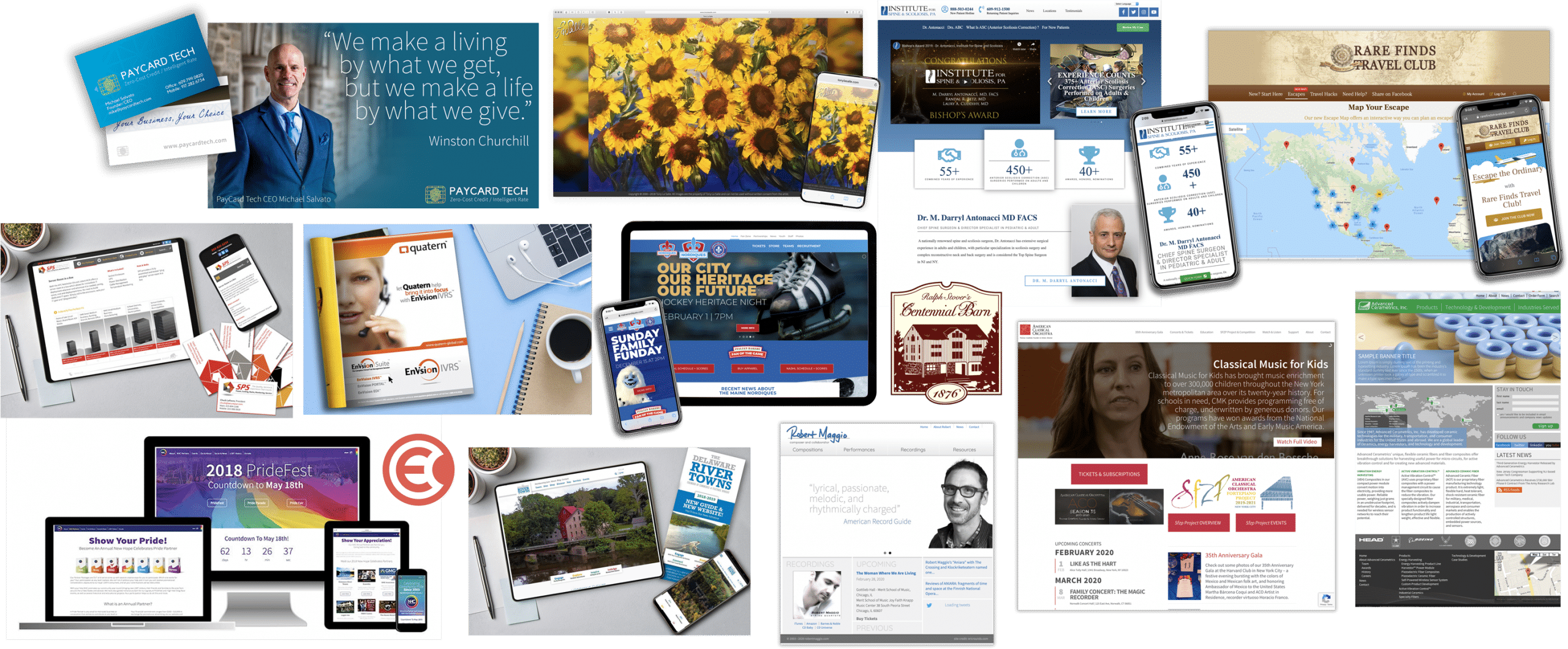
Websites are one part of what the firm provides: business websites, websites for organizations, and nonprofit websites.
We think a highly functional website helps enterprises of every size, from fledgling solo ventures to seasoned industry players.
A website alone isn’t a magic wand for business success, though. You also need to identify a market opportunity and offer something unique that resonates with your target audience.
With that in mind, these are the reasons your business or organization needs a website.
Add Credibility & Trust
In DreamHost’s 2026 Local Business Trust Index, a survey of 1,201 U.S. consumers taken in November 2025, 69% said a website is essential for a local business to be credible.
For those that do have one, design carries much of the weight. In a Stanford study in which 2,684 people rated the credibility of live websites (Fogg et al., 2002), a site’s design look was the factor mentioned most often, in 46.1% of comments.
Your website serves as a badge of credibility and trustworthiness, reassuring your visitors you’re a legitimate and reliable business.
A professional, well-designed website instils confidence and shows your expertise and commitment to quality. It’s an opportunity to make a strong first impression, displaying testimonials, certifications, and case studies that vouch for your business’s credibility.
This matters more as consumers grow cautious about where they invest their time and money, because scams are rife and exponentially damaging.
Present a polished and trustworthy website and you stand the best chance at winning trust and building lasting customer relationships.
Generate & Qualify Leads
Your website attracts and qualifies leads. Think of it as a magnet that draws potential customers to your business and a filter that separates the wheat from the chaff.
Using engaging content, strategic calls-to-action, and intelligent forms, your website can capture vital information about visitors, helping you understand their needs.
Casual browsers become qualified leads, ready to engage with you. The result is your effort is more focused on prospects who are more likely to convert, making your sales process more efficient.
24/7 Availability
Your website never closes, offering 24/7 availability to your customers. You get some sleep (hopefully).
Convenience is king, and your website keeps your business open to accept enquiries, answer questions, and even make sales.
Your competitor is just a click away, so stay one step ahead by providing instant access.
Answer FAQs
From opening hours to prices and return policies, your website serves as a valuable information hub, answering common queries in a well-structured FAQ section.
By anticipating and addressing the questions your customers are likely to have, your website saves time (for both you and your customers) and improves the user experience.
FAQs build confidence in your brand, reduce your workload, and improve overall satisfaction.
Showcase Products, Services & Skills
Your website is your digital shop window: THE place to showcase your products, services, and skills.
Take the opportunity to highlight the best your business has to offer beyond your skills and services: testimonials, qualifications, memberships, awards and more.
Support Advertising Campaigns
Your website is at the heart of all your marketing campaigns. From leaflets and brochures to Google Ads and social media ads, they should all center around your main asset.
Whether it’s a new product launch, a seasonal sale, or a brand awareness drive, your website provides the infrastructure to host, promote, and track these initiatives. Integrate with various marketing and analytics tools, create targeted landing pages, capture leads, and measure the effectiveness of your campaigns in real time.
Take Payments
We’ve written before about why it’s so important to accept card payments. Card payments save you hassle and risk. Without them, your customers probably aren’t as happy, and you’re missing out on revenue.
Incorporating online payment options on your website is convenient for customers. That’s rarely a bad thing. Surely, you want to take payments around the clock, from almost anywhere in the world?
Whether it’s a local customer purchasing in the wee hours or someone halfway across the globe, your website is the most cost-effective way to make sure you’re always open for business.
Integrate with Apps
If you’ve got this far, you’ll probably have got the message: your website is the centre point of your business’ digital presence.
Among its advantages is the ability to integrate with other apps.
Want to take bookings online? Use an app like Booksy.
Want to give people directions to your premises? Show a Google Map.
Want to take payments? Integrate with a tool like Stripe.
Want a chatbot or a place to manage your customer records? Try a market leader like HubSpot.
Want to start an email list? Connect your website to MailerLite.
Integrations like these can grow revenue, save time, and reduce risk. They are built to solve problems and help you take advantage of opportunities.
Reflect Your Brand
Your website is the digital embodiment of your brand’s personality and values.
It’s where first impressions are formed and brand stories are told. Your logo is one part of it; every color, font choice, and line of copy on your website should reflect who you are as a business.
A well-crafted website carries your brand’s voice and creates a memorable experience that resonates with your visitors and sets you apart from the competition.
You Own It
Unlike social media platforms where rules and algorithms change at the whim of the platform, your website is your domain, literally.
You don’t own your Facebook page, your TikTok account, your Instagram profile, your Checkatrade listing… you don’t even own your Google Business Profile.
You do own your website. You have complete control over the content, design, and functionality, allowing you to tailor every aspect to perfectly fit your brand and audience.
Don’t leave yourself at the mercy of third-party platforms. You set the rules, you create the experience, and most importantly, you build an asset that grows in value as your business expands.
Accessibility
An accessible website complies with legal standards and shows empathy and consideration for all users.
This includes those with disabilities, using assistive technologies, or even those with temporary impairments.
Ideally, your website should be an inclusive space where everyone has equal access to your services and information. In doing so, you expand your audience and reinforce your brand’s commitment to inclusivity and social responsibility.
Capture Consent
Consent is the cornerstone of a trusting relationship with your audience.
Regulations like GDPR set the rules, and following them shows your visitors that you value and respect their privacy. Done the right way, consent capture keeps your website on the right side of the law and builds trust and transparency, encouraging visitors to engage more deeply with your brand.
Find Customers That Don’t Use Social Media
Not everyone is glued to social media, and habits are constantly changing.
By relying solely on social platforms for your online presence, you’re missing out on a significant segment of the market.
Your website acts as a net in the vast ocean of the internet, reaching potential customers who prefer a more traditional online experience or who are wary of social media and all its perils.
Your Competitors Already Have One
If you don’t have a website, you’re practically invisible next to your competitors who are already playing the online game, and you risk being left out of the conversation entirely.
I’m Fully Booked. Do I Still Need a Website?
Surprisingly… yes… for several reasons. And understandably, we deal with this objection quite a lot, although it’s often in the form of a statement like: “I don’t need a website, I’m already fully booked.”
You might already have been convinced that you need a website for the multitude of reasons above. If you’re still on the fence, here are the 4 most important advantages you should consider given your scenario:
A) Raise Your Prices
More demand gives you a great opportunity to increase your prices. The more people want to use you, the more you can afford to test price rises.
Test them gradually and watch how prospects respond. If no one ever pushes back on price, you likely have room to go higher.
B) Save Precious Time
A website saves you time because it answers common questions and qualifies lots of your leads before they get as far as you.
Freeing up time might be your goal, but you can also use the precious minutes to drum up even more business.
C) Improve Profitability
Higher demand allows you to filter through your products and services, and hone in on what makes you happiest, or is more profitable. Take more bookings of the things you like doing, and start winding down those you don’t.
D) Level Up
A well-built website can support the growth that takes your business to its next level, whether that means expanding into new areas, adding staff, or launching spin-off services.
Are There Alternatives to a Website?
A website is perhaps the most vital component of your digital presence, but there are other avenues worth exploring.
Each offers unique benefits, and downsides.
A) Social Media Platforms
For businesses, platforms like Facebook, Instagram, and LinkedIn offer dynamic spaces to engage with audiences, showcase brand personality, and even drive sales directly through social commerce features.
B) Marketplaces
If direct selling is your main game, e-commerce marketplaces such as Amazon, eBay, or Etsy can be as effective as setting up shop in a high-traffic shopping centre. These platforms bring the customers right to your virtual doorstep, handling much of the visibility and traffic generation. However, remember, they come with their own set of rules and commission structures.
C) Email Marketing
Email marketing is a personal, direct line to your audience’s inbox, ideal for customized promotions, updates, and building ongoing customer relationships. When executed well, email marketing can be a potent tool for nurturing leads and boosting customer loyalty.
D) Google Business Profile
For local businesses, an optimized Google Business Profile is an essential digital billboard on one of the busiest streets in town. It allows you to manage your online presence across Google, including Search and Maps. You can help customers find you more easily, and show off reviews, opening hours, location, and your services.
E) Telephone
A phone-only business relies heavily on the personal touch of voice, building relationships through direct conversation. This method suits businesses that thrive on personal connection and can be particularly effective in local or niche markets where a human touch is highly valued. While it severely limits reach and scalability, the personal approach can be quite refreshing.
Each of these can play a potentially valuable part in an effective marketing strategy. But, in nearly all cases, they deliver the best results when used in conjunction with a well-designed website.
What Does a Website Investment Look Like?
The investment in a website can vary significantly based on several factors, including the complexity of your website, the level of customization, and whether you choose to do it yourself or hire professionals.
Let’s explore the key options to give you a clear idea of what to expect.
DIY Website Builders
DIY website builders, like Wix and Squarespace, offer a relatively user-friendly solution for business owners looking to create their own websites. They provide a range of templates and drag-and-drop features, making it easy to set up a basic website without technical skills.
Pros
-
Low initial investment for startups or small businesses with tight budgets
-
Can be quick to set up with a variety of templates
-
Less requirement for technical skills in coding or design
Cons
-
Limited customization options, which might not fully align with your requirements
-
DIY solutions often lack advanced features needed for scaling
-
Time-consuming for business owners to manage and update
What Else Affects Your Website Investment?
When getting a quote for your website, or thinking about its requirements, bear in mind that these factors will impact your quote:
-
Customization Level & Size: More pages normally increase the investment, as do custom designs and unique features.
-
E-commerce Capability: Integrating e-commerce functionality, like shopping carts and secure payment systems, adds complexity and raises the investment.
-
Domain, Hosting & Updates: The choice of hosting provider and domain registration affects the investment. Regular maintenance for security, updates, and content changes can also incur ongoing fees.
-
Content Creation and Management: Professional copywriting, multimedia content, and content management systems (CMS) can add to the investment.
-
SEO & Content Strategy: Implementing an effective SEO strategy and creating quality content drive your website’s visibility and performance but add to the investment.
-
Third-Party Integrations: Adding tools or services, like customer relationship management (CRM) systems, or social media integrations can increase the investment.
The Short Answer
A website is a necessity. It generates demand, builds credibility, shows what you offer, and captures and converts leads, around the clock.
While there are cheaper alternatives, e.g. social media, none offer the same level of control, customization, and reach as a dedicated website. In our experience, the value and opportunities a website brings soon outweigh the investment.
For a startup taking its first steps or an established business expanding its digital footprint, your website is likely to become the lungs of your business.